Why Planning Matters in the Age of AI-Driven Development

The stock market keeps watching NVIDIA, the company leading the AI industry, break new records in market cap. Governments are declaring that the future of their national industries depends on AI. And AI has already seeped so deeply into our workplaces — especially in IT — that it almost feels like AI has been sitting at the desk next to us for years.
We now live in an era where everyone talks as if improving productivity with AI is the single greatest mission of our time.
So, are your projects moving at explosive speed too? Or, despite all the news about AI making development faster, does the overall pace of your projects still feel exactly the same?
This article starts from that exact question. If AI can generate code dramatically faster, why is the speed of the entire project still standing still? And why, in order to solve this problem, should we pay attention not to development, but to planning?
AI Development Is Here. But Is It Enough?
1) We’re Already in the Age of AI Development
The IT industry has fully entered the era of “AI development.”
AI coding tools like Cursor and GitHub Copilot are quickly becoming less of an option and more of a necessity.
According to the latest 2025 Stack Overflow Developer Survey, more than 80% of developers say they are already using AI tools or plan to use them.
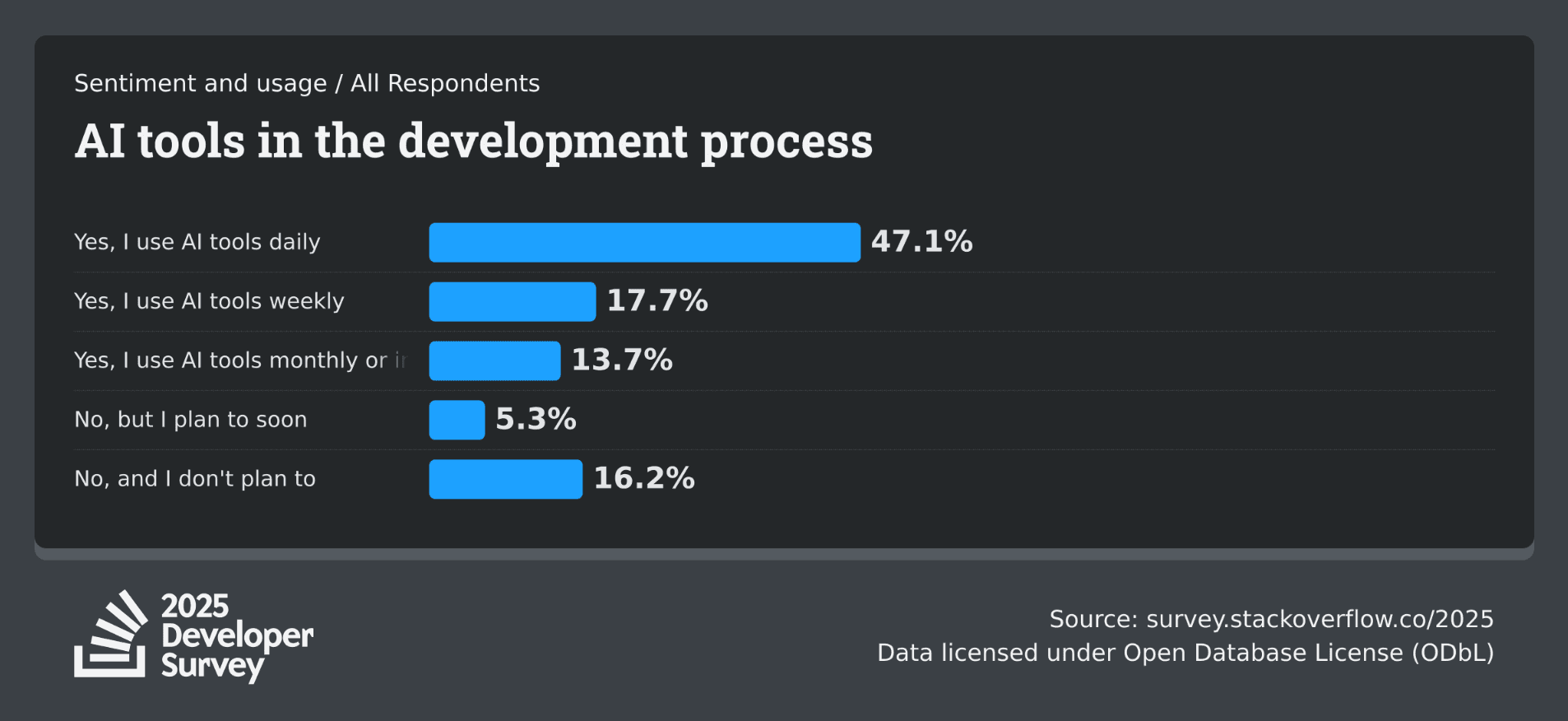
Survey on AI tool adoption among developers. <Source: AI | 2025 Stack Overflow Developer Survey>
Big tech companies continue to make bold claims that “AI will replace developers,” and sensational headlines about workforce reductions keep appearing. At the same time, many developers in the field say they are experiencing remarkable productivity gains by adopting AI tools.
According to GitHub’s own research, a group of developers using Copilot, its AI coding assistant, completed certain tasks more than twice as fast as the group that did not use it.
The increase in development productivity through AI is now a clear reality. We all know this.
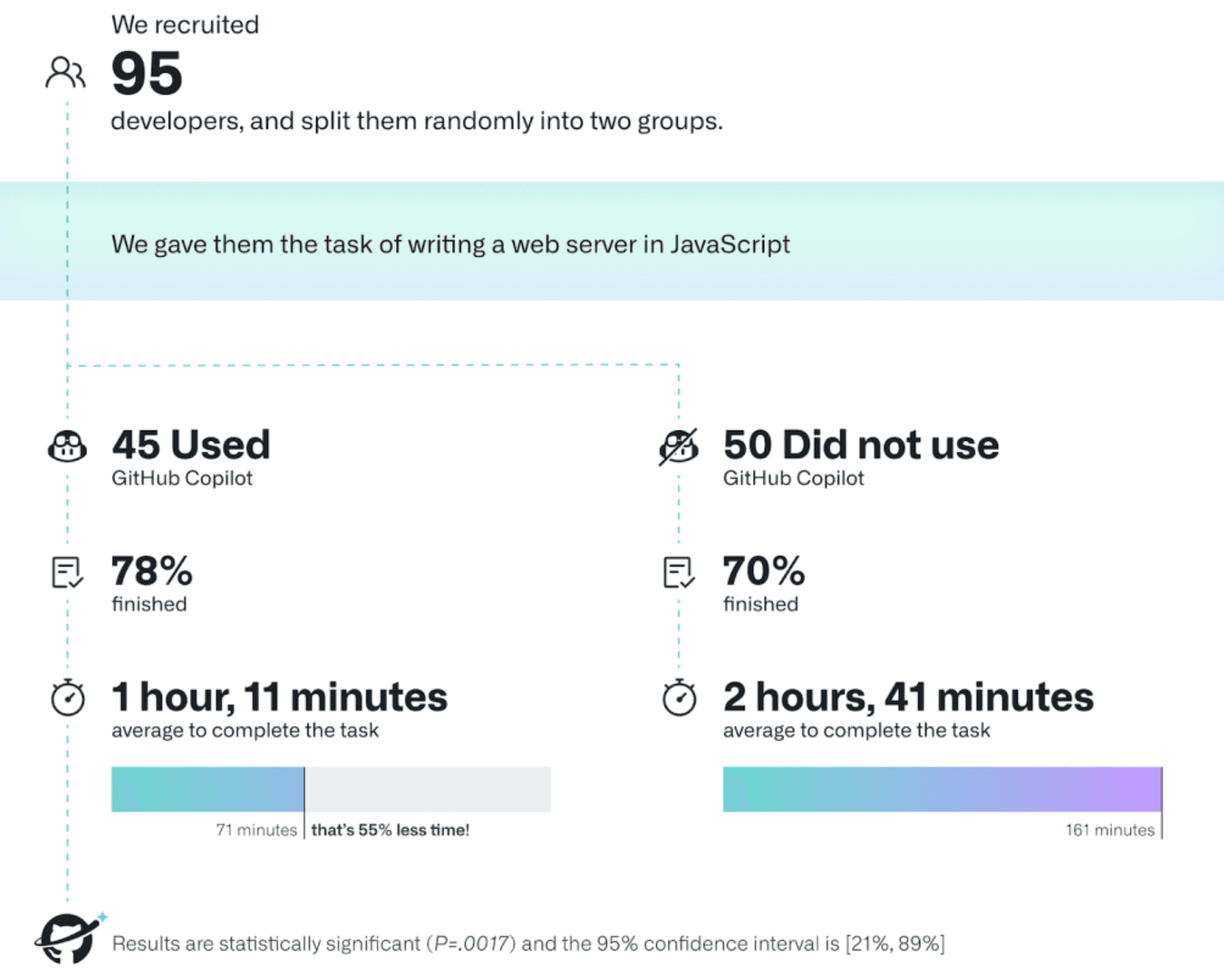
Although it is GitHub’s own research, it is now widely accepted that AI coding tools are being used effectively. <Source: Github Blog>
Boilerplate code that used to take several late nights, complex utility functions, and API endpoints with tests can now be completed in just a few minutes.
We have even entered an era where non-developers such as planners and marketers can create landing pages or data analysis scripts with a simple prompt.
Recently, Yozm IT published an article that drew attention by sharing the story of someone from a non-development background who learned vibe coding and started a side job as a freelance developer.
The barrier to development has dropped dramatically, and the productivity of the act of “development” itself has risen to an extreme level.
2) If Development Gets Faster, Does the Project Get Faster Too?
But here, as people working in the field, we need to ask a more fundamental question.
“Has our project become faster by the same amount that coding has become faster?”
Many developers, PMs, and designers working in the field will probably find it hard to answer “yes” right away.
Even if AI makes it much easier and faster to write code, projects are still chased by deadlines. Unexpected rework still repeats. And the long, exhausting tug-of-war with clients, or internal planners, still does not end.
That is because limited development speed is not the only factor that delays a project.
There are clients who barely respond during the project, then suddenly appear near the end and pour out detailed revision requests. There are planners who show up with a smile in the middle of development and design work, holding a changed planning document. There are CEOs and directors who suddenly change their minds, or realize after the project has already started that what they wanted was actually something completely different.
No AI tool solves these problems.
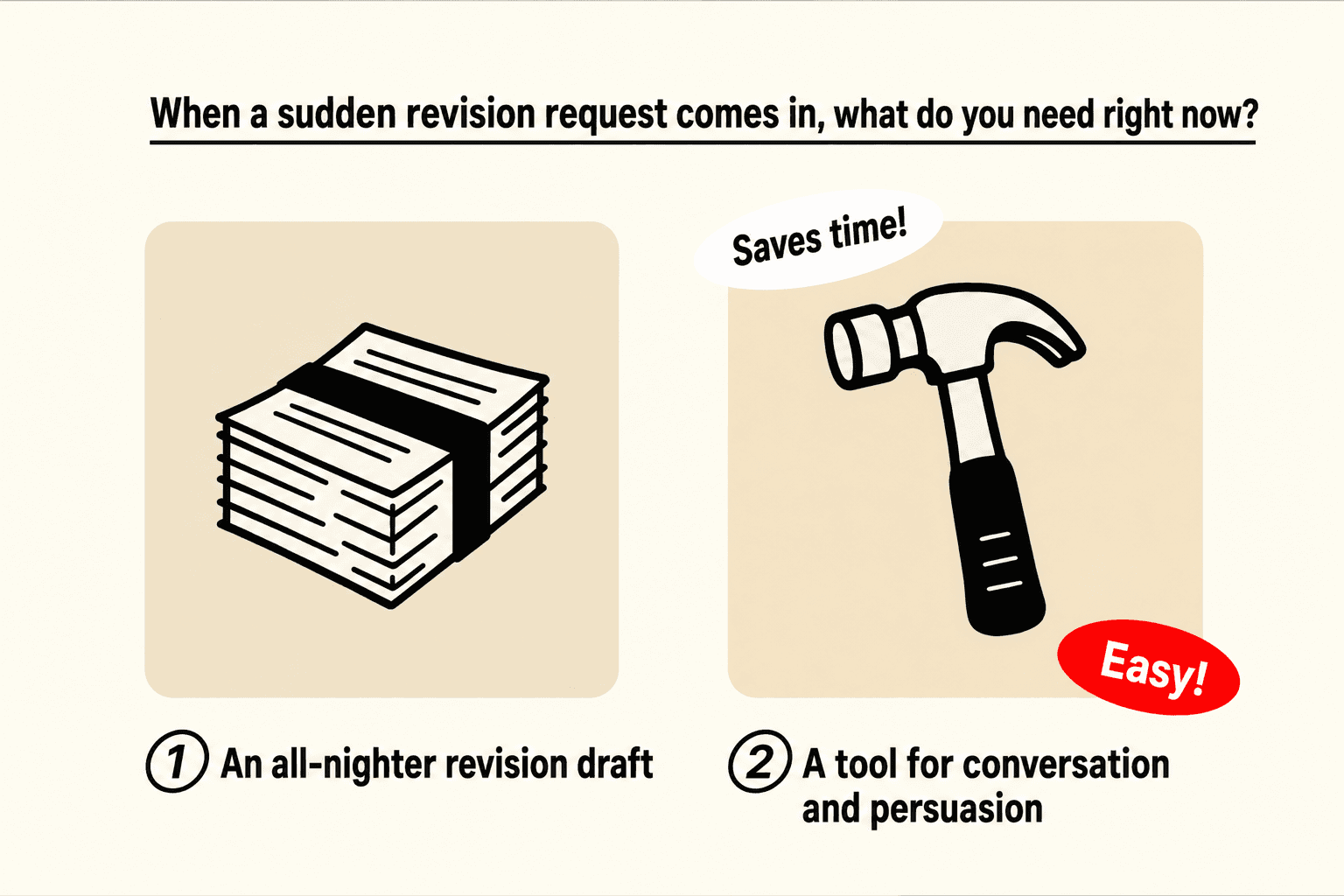
The easy choice may be obvious, but AI does not help us with this. <Source: Author, generated with ChatGPT>
Have you ever had to git reset --hard an entire block of code written by AI?
If AI has made code production 10 times faster, why are our leave-work times and project deadlines still the same?
In the AI Era, GIGO Has Become Even Stronger
1) AI Does Not Decide the Quality of Code
The core of the problem is not the AI tool itself.
It is what we are feeding into that tool.
The classic saying in computer science, GIGO — Garbage In, Garbage Out — has returned in the AI era in a much stronger and more painful form.
Here, the “garbage” that developers put into AI tools is fragmented, unclear planning that has not been properly structured.
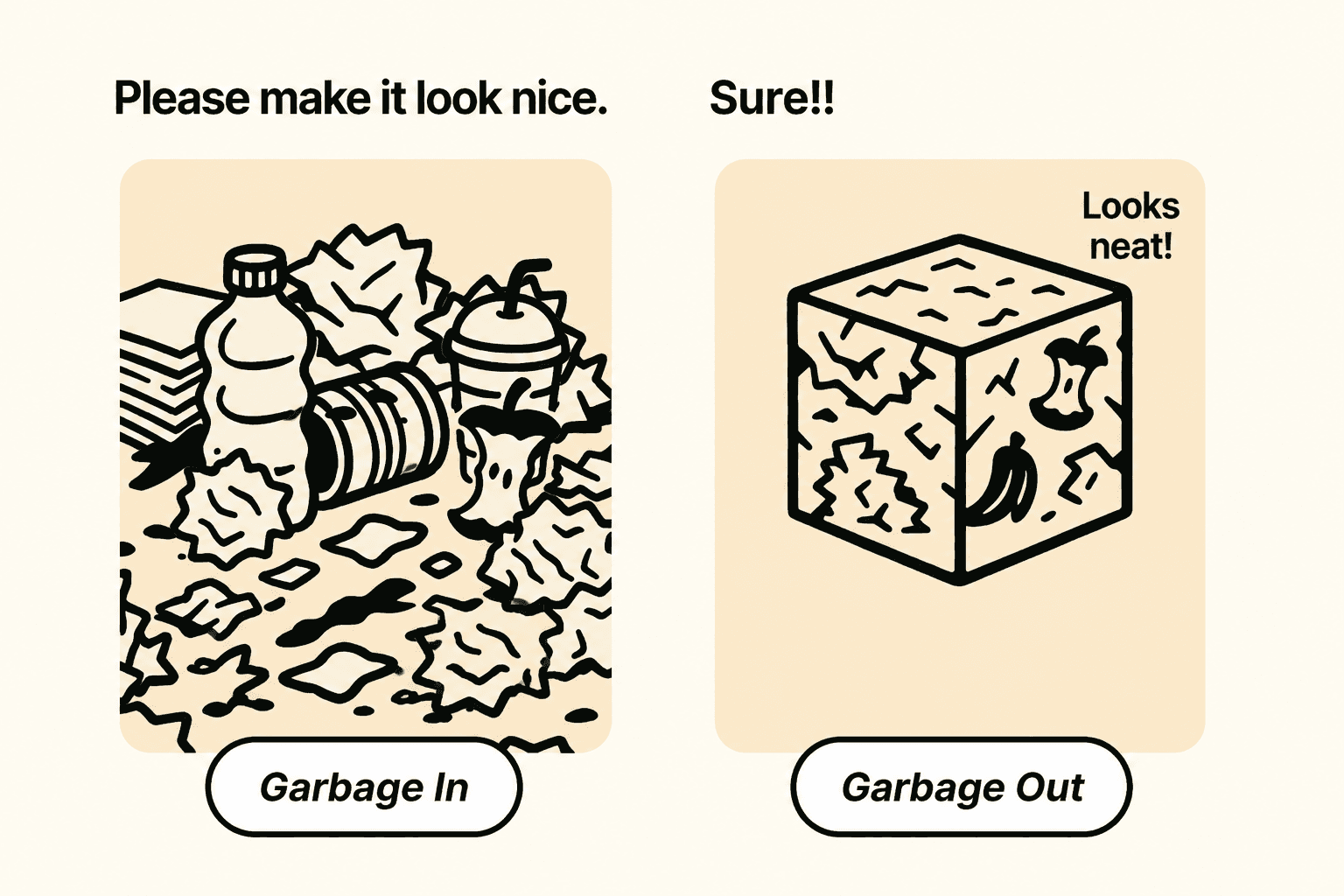
Even if it does its best, garbage is still garbage. <Source: Author, generated with ChatGPT>
Developers know very well what happens when planning is fragmented, the full flow is not confirmed, and development instructions are vague. It often comes back as a much bigger disaster later.
How many developers have never once felt anger toward planners?
Anyone who writes code has probably had that sudden moment of emptiness while coding, thinking, “Well, this is going to change again anyway.”
And many have probably felt their blood pressure rise at phrases like, “It’s just a small change,” “Isn’t this easy?” or “Just this once, please.”
The arrival of AI coding tools can make this problem even worse.
In the past, unclear planning created a productive kind of friction. Developers would ask questions, explore alternatives, and predict potential risks.
That friction slowed down initial development speed, but in the long run, it acted as a safety device that prevented massive rework.
But AI coding assistants interpret the given prompt literally and immediately generate optimized code. In doing so, they can skip the process of reflecting on the risks hidden inside ambiguous requirements.
As a result, AI can become a GIGO amplifier that magnifies the disastrous outcomes created by ambiguity.
2) How AI Ends Up Producing Garbage
Let’s use a familiar example to explain how the productivity of AI coding tools can end up producing garbage.
Imagine a peaceful Tuesday morning for K, a freelance developer. A message arrives from the client.
Client: “K, since this is just an MVP for now, please add only Google social login and build it quickly.”
K thinks this is a simple task.
He immediately enters a prompt into his favorite AI coding tool.
After just a few exchanges, the code is complete in three hours, including OAuth 2.0 logic for Google login, callback handling, and JWT token issuance.
npm run test passes cleanly. Perfect.
In this process, AI has greatly reduced the developer’s cognitive burden. The era of AI-assisted development feels beautiful.
But one week later, “that message” arrives.
Client: “Oh, K. We discussed this internally, and since the core of the service is viral growth,
this is just a small change, but could you also make it possible to enter a referral code during sign-up?”
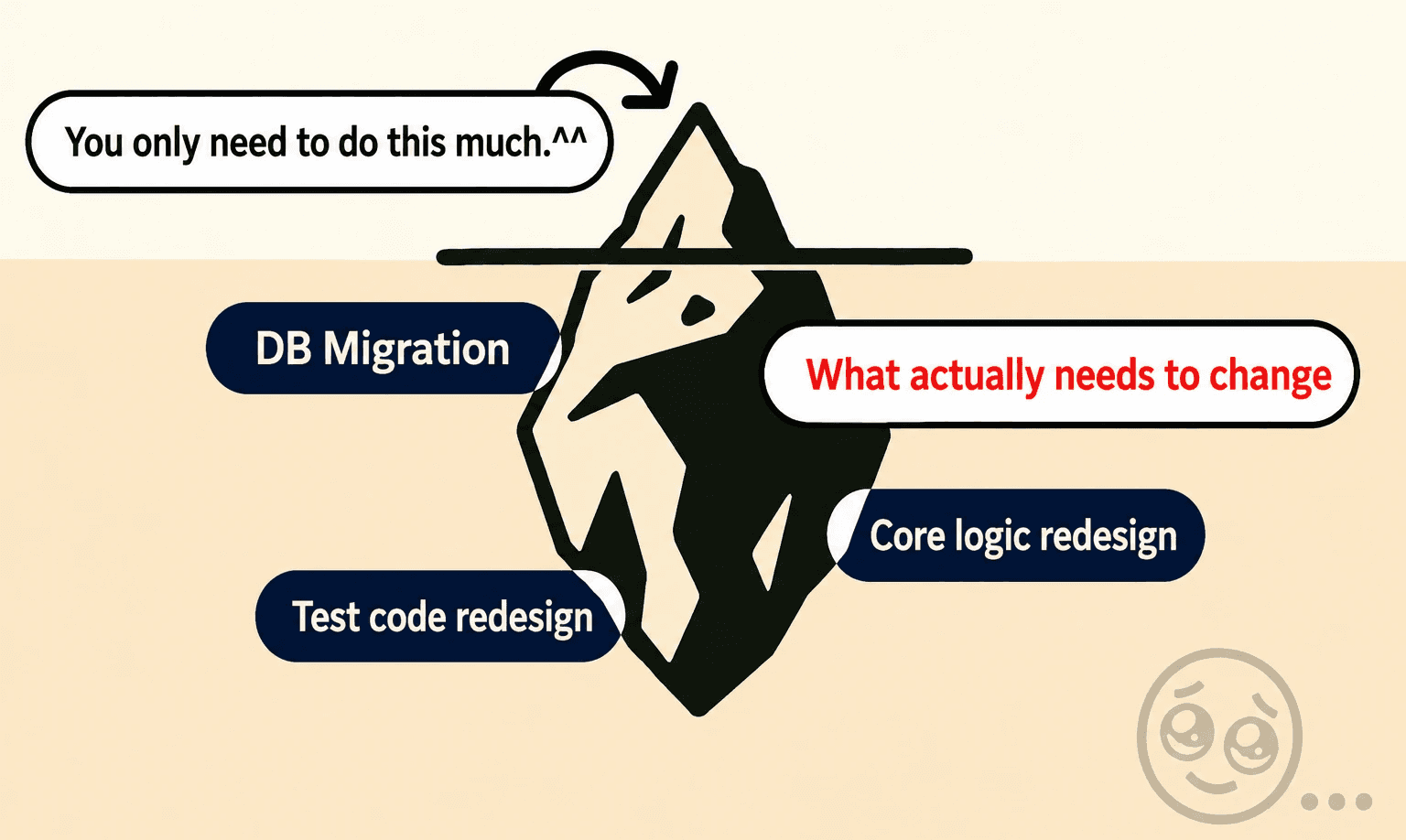
<I would also love to do exactly that much and no more. <Source: Author, generated with ChatGPT>>
Because of this small change, the code K had previously written may become practically useless.
The AI coding tool easily generated code that perfectly matched the first instruction: “social login only.”
But because that code could not take into account the broader product context — viral growth through a referral system — the client’s request is no longer a small change at all.
AI does not understand the full context of the product plan.
It only follows the user’s instruction.
In a situation where the user’s instruction is not clear or structured, the powerful productivity of AI tools does not help you succeed faster.
It only helps you fail in a more complex and sophisticated way.
The Planning Bottleneck Is Getting Narrower
1) The Planning Bottleneck Has Always Existed
In truth, the planning bottleneck is not a new problem.
It has been an old assignment for the IT industry.
Reports published by the Project Management Institute, or PMI, have repeatedly pointed to unclear requirements management as one of the major causes of project failure.
For example, PMI’s 2014 report found that as many as 47% of failed projects failed because of unclear requirements.
Even before AI coding tools appeared, many projects failed because of communication problems around product requirements with clients or internal planners.
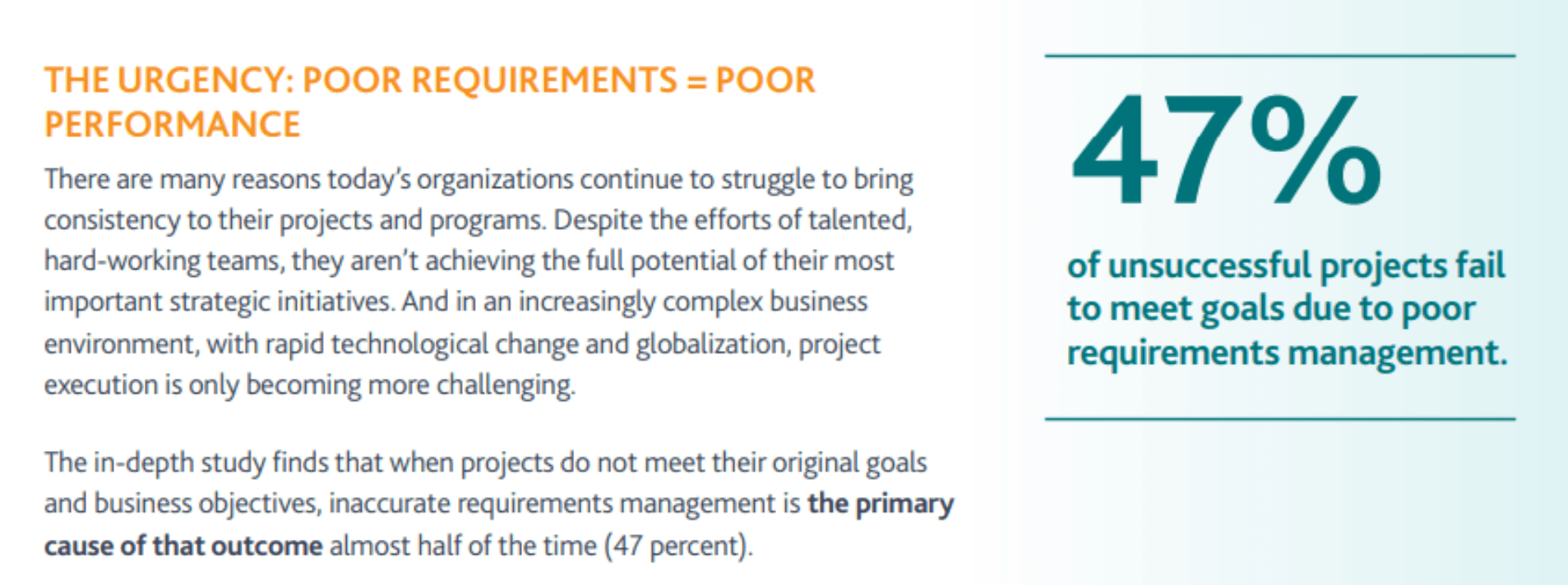
Even in the past, projects often failed because unclear requirements were not managed properly. <Source: PMI Pulse of the Profession report>
Even when problems in the planning stage do not lead to the worst possible outcome — project failure — the planning bottleneck can still have a real impact on the project.
The issue is that the price of not resolving problems clearly during planning is paid later, and very expensively, during development or product operation.
Everyone knows that if a problem is not caught during the planning stage and is only discovered during development, or after the product is complete, the cost can increase by tens or even hundreds of times.
This is exactly what the famous principle by Barry Boehm, a leading figure in software engineering, explains.
The cost of finding and fixing a bug in a software project increases exponentially as the project progresses.
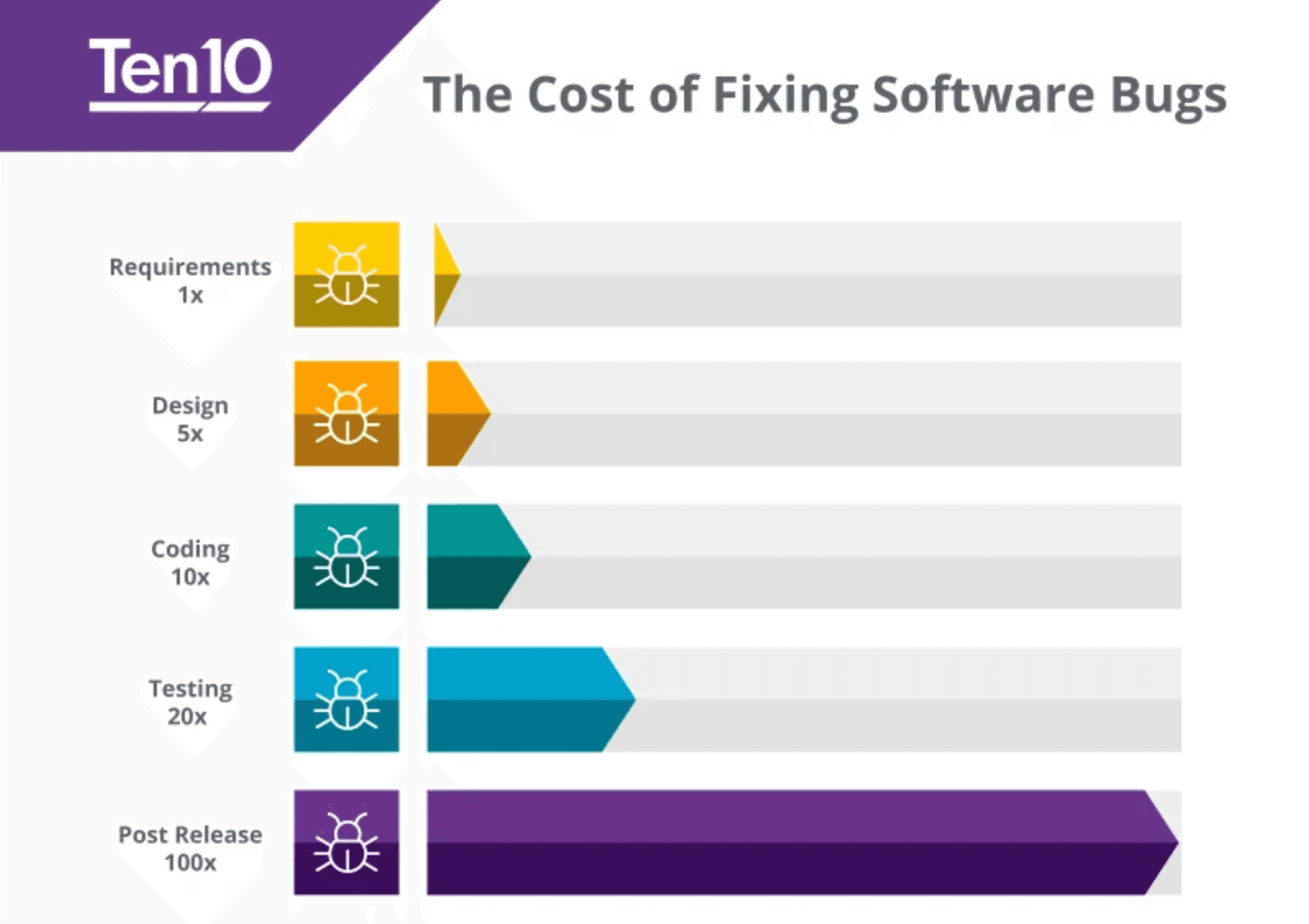
Boehm’s law says that the cost of fixing a problem increases exponentially the later it is found. <Source: Ten10 Blog, How much are software bugs costing you?>
2) In the AI Era, That Bottleneck Is Getting Even Narrower
The problem is that now, as development productivity improves explosively with the help of AI, this bottleneck is getting even narrower.
AI has not invalidated Boehm’s law.
If anything, it compresses the timeline of that law.
If you start development by relying only on faster coding speed, without precisely confirming and structuring product requirements during the planning stage, the time you saved will eventually be consumed by rework — often more than consumed.
Let’s go back to the referral code example.
To handle this “small change,” developer K has to do the following work.
Change the DB schema
Add fields such as
referral_code(nullable, unique) andrecommended_by_user_id(foreign key) to theUsertable.
Run DB migration
Write and execute migration scripts so the new schema applies to existing users who signed up through social login.
Modify DTOs and validation logic
Update data transfer objects such as
RegisterUserDto, as well as backend validation logic.
Modify core business logic
Change the sign-up logic in
AuthServiceinto a new flow:
“1. Social login → 2. Optional referral code input → 3. Sign-up complete.”Add referral code validation, point reward logic if applicable, and the logic for setting the relationship between referrer and referred user.
Modify API endpoints
Update the request and response bodies for endpoints such as
/auth/register.
Modify the frontend
Add a “Referral Code (Optional)” input field to the sign-up UI and update related state management logic such as React Query or SWR.
Modify test code
Fix all the existing
AuthServicetests that break, and write new test code for the added logic.
In the end, even if AI saves coding time, the moment an unplanned requirement is added, the project has essentially gone back to square one.
If planning is not structured carefully from the start, developers may work faster, but the rework ratio only increases.
The result is not a shorter project timeline.
It is more frustration and fatigue for developers.
The faster AI makes development, the more painful it becomes when the first button — planning — is done wrong.
In the AI Era, the Core Is Planning Accuracy
1) Planning Must Be Structured Faster and More Accurately
In conclusion, no matter how much productivity improves in development, and no matter how impressive future coding tools become, the core problem will not disappear unless planning becomes just as fast and accurate.
If development is racing at 100 km/h while planning is walking at 10 km/h, what speed will the project actually move at?
In that process, distrust toward planning will only rise like smoke.
Until now, we have been focused on the question:
“How can we use AI to produce code more quickly and accurately?”
Now, it is time to shift the question.
“How can we use AI to structure planning more quickly and accurately?”
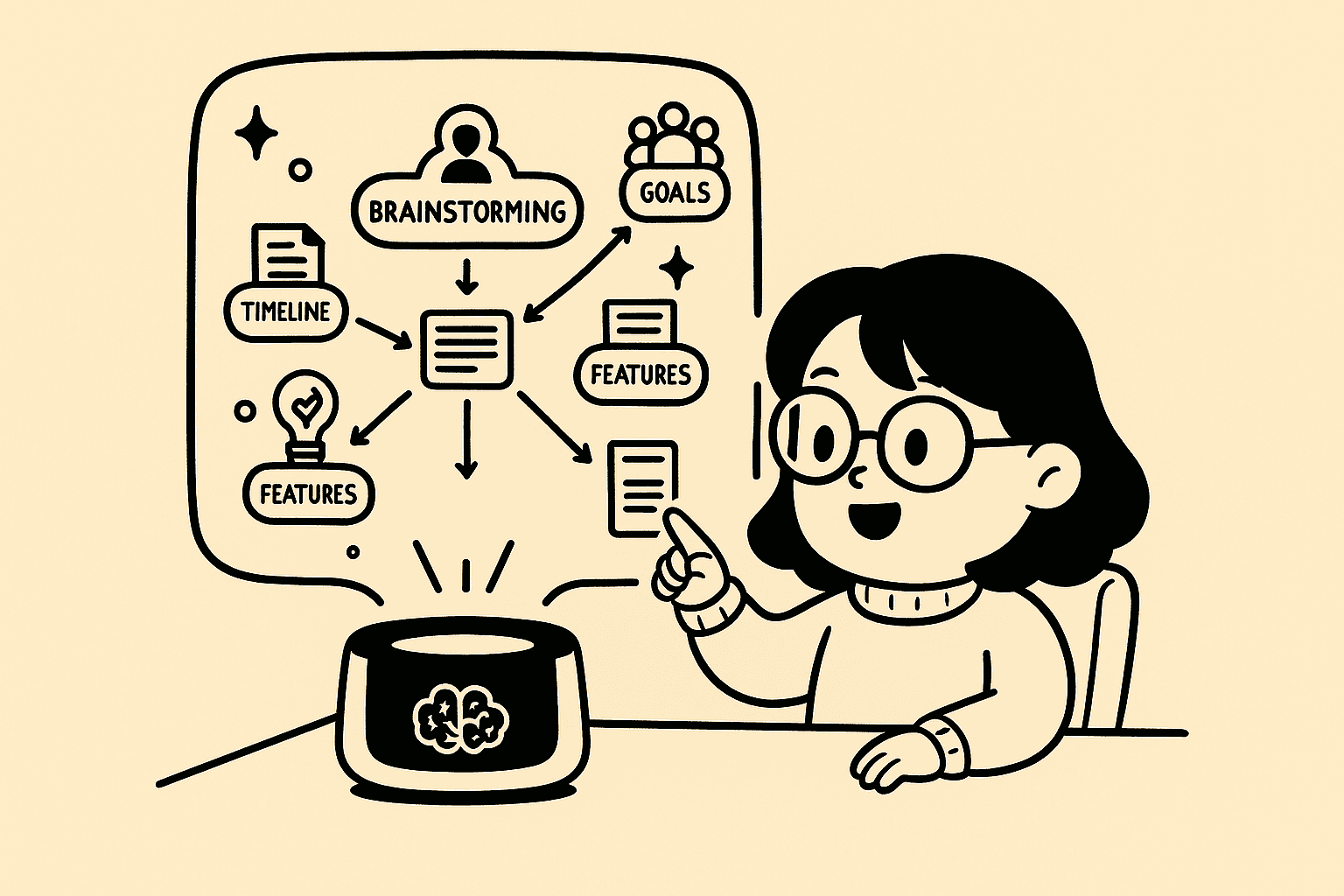
Structuring planning quickly — that is our goal. <Source: Author, generated with Gemini>
The key here is structure.
This is not about writing the same PPT or Notion planning documents a little faster with help from GPT.
Planning that is truly needed in the AI era means something different.
It means innovating the process itself: taking vague requirements from clients or product owners, clarifying them, and producing structured specifications that allow developers to start building immediately.
Interestingly, developers already seem to sense the need for this change instinctively.
According to a GitHub survey, among developers who saved time with AI coding tools, 40% to 47% said they spent that saved time more on system design and planning.
This shows that developers are naturally reinvesting the cognitive resources freed up by coding automation into higher-level problems — better planning and architecture design.
In other words, the development field may be the place where the importance of planning is felt most urgently.
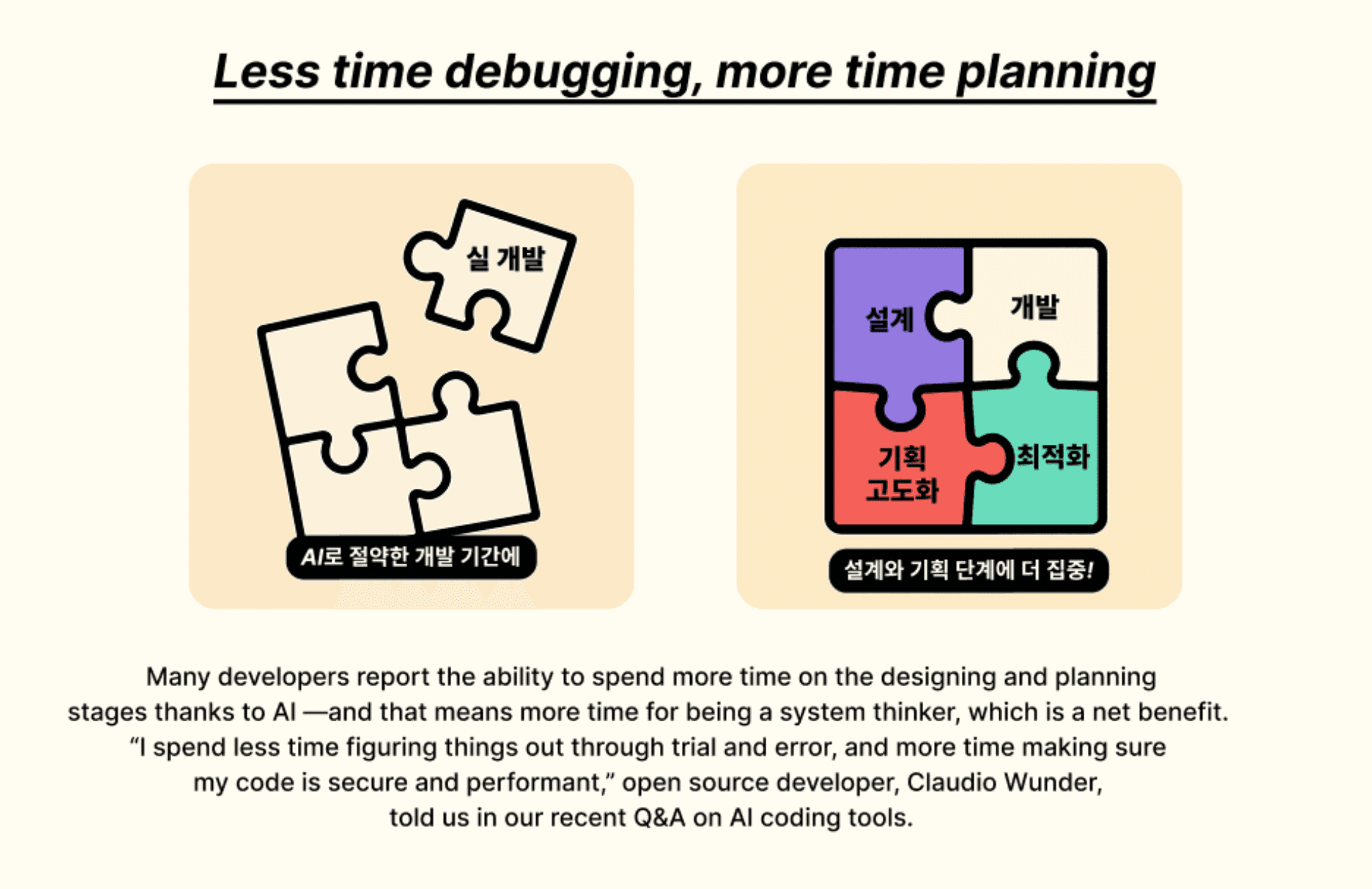
People who have experienced productivity gains from AI coding tools are naturally paying more attention to planning. <Source: How developers spend the time they save thanks to AI coding tools - The GitHub Blog , image generated with ChatGPT>
The real “fuel” developers need to feed into AI coding tools is structured deliverables like these.
Information Architecture: What menus exist, and how are they organized by depth?
Feature Spec: What features should be included in the product, and what detailed policies apply to each feature?
User Flow: In what order and through which branches does the user experience these features?
This is not simply writing a planning document.
It is engineering requirements — drawing the blueprint of the system before development begins.
Only when we can use AI to structure planning into these systematic documents can we say that we have truly paid attention to planning in the AI era.
Closing: In the AI Era, We Need to Pay Attention to Planning
The more powerful AI coding tools become, the more important planning becomes as the fuel those tools run on.
AI coding tools are like the engine of a powerful F1 machine.
And they will only get stronger.
But without clear, structured navigation called planning, that engine is nothing more than a piece of scrap metal racing quickly in the wrong direction.
The era of Vibe Coding has already arrived.
We have become very familiar with the idea of vibe coding.
Recently, Figma also announced “Vibe Design” at its conference, signaling AI-driven innovation in the design field.
Now, we need to pay attention to the next stage that will bring another major productivity shift to the IT industry: Vibe Planning powered by AI.
Here, Vibe Planning means a new level of planning that captures the goals of the business and the vibe of product users, then turns them into structured specifications that designers and developers can immediately understand and execute.
Whether developers can escape endless rework and exhausting communication, and focus only on the real joy of development, depends on how seriously we pay attention to this planning.
👉Read on Yozm IT, the IT magazine for today's professionals.
Back to list
